
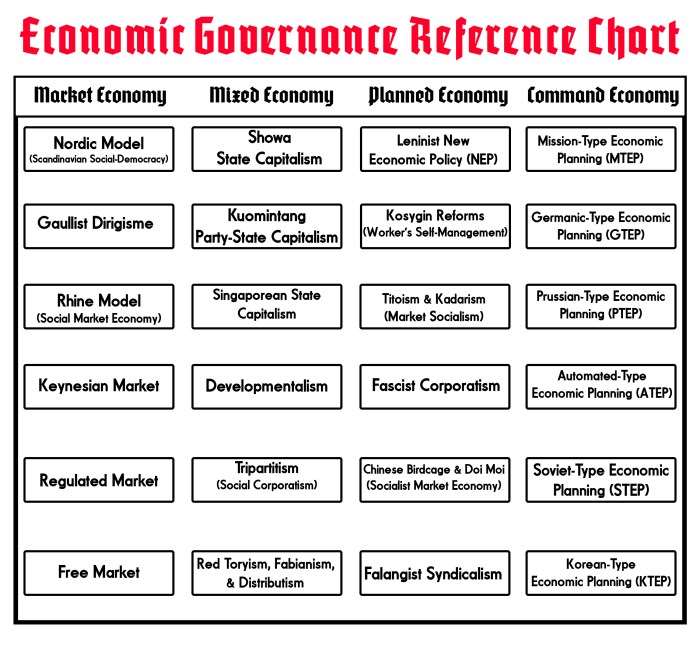
Back on Wednesday, I mentioned that I needed to find more evidence to determine Mainland China’s recent Recession is compelling Beijing to start turning its back on the Private and Foreign Enterprises of its Socialist Market Economy. The Chinese economy is split between State and Social Enterprises on the one hand and Private and Foreign Enterprises on the other. The latter pair is a “bird,” the latter resembling a “birdcage” to house the “bird.” This “bird” will only grow insomuch as the owner of the birdcage, the CPC, is willing to let it grow. If they decide to let the “bird” shrink, then the size of the “birdcage” grows in response.
In the terminology of my Treatises, the “birdcage” corresponds to Economic Socialization, whereas the “bird” creates Economic Liberalization. Put the two together and one will discover the Socialist Market Economy is built on compromises between these two prevailing forces. The CPC acts as the counterbalance here.
What I had yet to find out both yesterday and Wednesday is whether there were signs of growing Economic Socialization in Mainland China. If such evidence does exist, then we can expect the Socialist Market Economy to shift maintain its position as a Planned Economy and avoid downgrading further into a Mixed Economy.
Are there signs of Economic Socialization in Mainland China in response to the empirical evidence pointing toward signs of a Recession? Is the CPC determined to avoid repeating the mistakes of the CPSU by not pivoting toward further Economic Liberalization, given that a Recession in the former Soviet Union had laid the foundational groundwork for Perestroika?
As a matter of fact, yes, there is evidence of Mainland China pivoting away from Economic Liberalization. From what I can tell, much of it is being motivated out of strategic concerns about the recent changes in US trade policy. State Enterprises have been established recently to mine data from the Chinese Digital Economy. Under the Work-Standard and given its own set of conditions, the mining of such data would have been considered a source of Digital Arbeit. But that is a topic that is too complex to discuss here and should be reserved for The Digital Realm (1st Ed.). Even so, at the rate things are going over there, I would not too surprised if Mainland China succeeds in establishing one of the world’s first Social Forums as an analogue to Social Media.
Naturally, this has proven to be a thorn on the side of the Jeffersonians, who still view the flow of information as the “freedom to” and the “freedom from” information. There is far more to the Digital Economy than who has the power to create and disseminate information in the Digital Realm. It also matters greatly as to who has the power to govern economic life in the Digital Economy.
The responses among certain US States include restricting by law Social Media access for minors at certain times or ban TikTok and demand compliance from the Big Tech firms in Silicon Valley. Either of those endeavors could be justified to deny information to Chinese State Enterprises engaged in data collection. However, I am not convinced that the Jeffersonians are willing to view this phenomenon as a Protectionist measure, hence the recent invocations of Amendment I on the grounds of Free Speech and Free Press among those opposed to those measures.
Another recent endeavor concerns the billionaires in Mainland China that reaped the Kapital gained from the Dengist economic reforms of the past four decades. Spooked by the push for “‘common prosperity,'” Xi Jinping’s term for advocating Economic Socialization, Chinese billionaires have been trying to leave Mainland China for tax havens like Singapore. It has gotten to the point where Mainland China is expected to lose more millionaires this year than any other country in the world.
Of course, the State Capitalism in Singapore is going to be their next logical destination for China’s millionaires and billionaires. What has yet to be seen is whether the CPC’s anti-corruption measures will lead to new taxation laws. I would like to think that enforcing greater tax compliance would be next on Beijing’s agenda.
Categories: Politics
 The Fourth Estate
Leave a comment