
The emergence of Cryptocurrencies, beginning with Bitcoin, has made it feasible to entertain the development of “Triple-Entry Account Bookkeeping” as an expansion of Double-Entry Account Bookkeeping. Conceptually speaking, Triple-Entry Account Bookkeeping follows very similar premises to that of Double-Entry Account Bookkeeping. What made it so distinct in practice and thus worthy of mention here is that Triple-Entry Account Bookkeeping incorporates a third entry into the equation, a feat made possible by Blockchain Technology.
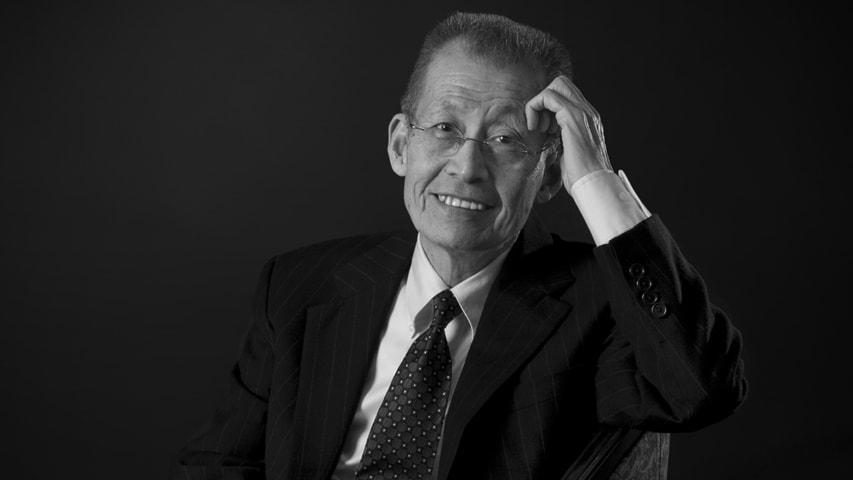
Triple-Entry Account Bookkeeping, otherwise known as “Momentum Accounting,” was the brainchild of the late Japanese accountant and economist Ijiri Yūji. A true Triple-Entry Account Bookkeeping System would build upon the accounting principles of the Double-Entry Account Bookkeeping System, allowing it to account for past, present and future accumulations of Kapital and Schuld. In essence, an Accountant would be able to not only account for past and present data, but they may even chart the trajectory of any future data before any record is made in the present.
An Accountant versed in Double-Entry Account Bookkeeping will find Ijiri’s ideas about a Triple-Entry Account Bookkeeping to be highly unusual, if not outright unwieldy. But for an Accountant familiar with the Work-Standard, who is already accustomed to Command-Obedience Account Bookkeeping, nothing about this should be unusual. If anything, Ijiri has made it easier to account for the Quantity of Kapital and Quantity of Schuld in a Neoliberal Empire of Liberty where Kapital and Schuld have grown increasingly abstract from tangible economic realities. The same is also true for anyone familiar with Blockchain Technology.
A peculiar equation was devised by Ijiri to conceptualize the basic idea behind the Triple Entry Account Bookkeeping, which is ‘temporal’ in the sense that it is fixated on Zeit (Time):

The equation was then recontextualized to provide a conceptual framework to make the following assertions based on the following:
- “Future” represents the Budget or how much Kapital is expected to be gained or lost.
- “Present” is the Wealth or the Kapital that one already has in the current accounting period.
- “Kapital” itself becomes Kapital that has had from the previous accounting period.

With those two equations, it is possible to discern the Quantity of Kapital held in the past, how much is available at present, and how much could be gained or lost by the next accounting period. Since the future has yet to occur, and while there are only projected estimations at present, appropriate decisions can still be made in the present to achieve either the desired results or at the very least an approximation of those results.
But how can the future be accounted for? It is extremely difficult for anyone, including an Accountant, to predict the future. In a transactional sale, we can assume that somebody had $10.00 USD and earned $5.00 USD by selling something worth that amount. Double-Entry Account Bookkeeping would have us record the transfer of Kapital from the buyer to the seller. Nobody other than the buyer and seller knows this.
Ijiri recognized that limitation by redesigning the basic accounting equation of the conventional Double-Entry Account Bookkeeping. What Triple-Entry Account Bookkeeping does differently is provide a comprehensive picture behind how a seller obtained the product for $5.00 USD and how they in turn ended up with $15.00 USD. It will also show how the buyer spent $5.00 USD, obtained an item, and ended up having $5.00 USD less. More importantly, the information is conveyed to everyone other than the buyer and the seller.
Put into practice, there would be three entries: Credit, Debit, and Trebit. If Credit and Debt are used to show how Kapital or Schuld changed hands across different accounts, then the Trebit shows how much Kapital or Schuld is being gained or lost during an accounting period. By knowing in advance how much Kapital or Schuld could be gained or lost, information can be conveyed by the Accountant to whoever has a vested interest in knowing about those transfers.
The initial equation can be expanded further to include information about how quickly the Quantity of Kapital is being increased or decrease and how far the Quantity of Kapital is capable of being manipulated by external factors. Those trends were what led to Ijiri to include an expanded rendition of the initial equation:

- “Force” refers to the rate at which the Quantity of Kapital is being changed real-time.
- “Potential” is a “‘mirror image’” (in Injiri’s terminology) of “Force,” which is to say the projected Quantity of Kapital by the next accounting period.
In a Production for Profit/Utility paradigm, such a concept feels unnecessary, if not, once again, unwieldy. But in the context of Blockchain Technology, these concepts are needed to determine where the Blockchain is going. Practically anyone with access to the Blockchain should monitor that transactional sale without even knowing the identities of the buyer and seller. Whoever else has access to the Blockchain will be able to know how many existing units of Cryptocurrency are being exchanged, how quickly new units are being put into circulation, and how long before any additional units can be made available. Those considerations do inform the algorithms behind everyday Cryptocurrencies, such as Bitcoin or Ethereum.
Therefore, prior to Bitcoin and Blockchain Technology, it was impossible to envisage the presence of a third party beyond that of the buyer and the seller within a transactional sale. One could only evaluate the transactional sale from the perspectives of either the buyer, the seller, or both. Blockchain Technology facilitates the existence of the third party by allowing anyone with access to the Blockchain to learn about the transactional sale. The Blockchain features cryptographic security measures designed to ensure that the identities of the buyer and seller are both hidden to the third party. At the same time, neither is aware of the identities of the third party. After all, anyone with access to the Blockchain is technically capable of becoming that third party, and the buyer and seller would not be the wiser to the cryptography employed by the Blockchain.
Moreover, Triple-Entry Account Bookkeeping includes another feature that has even been programmed into the Blockchain. Every transactional sale is assigned its own Timestamp and incapable of being altered or destroyed. The digital records are shielded from tampering. This creates an auditable financial trail to keep watch over the movements of Cryptocurrency and the changes in balances between Wallets. Thus, the Blockchain functions as a real-time ledger that is being recorded automatically, in addition to notifying people about the existences of newly created Cryptocurrencies. In fact, the Blockchain itself is what ultimately enables the accumulation of existing Cryptocurrencies and the creation of newer ones.
Since Bitcoin came with a built-in limit to how many can be created on its own Blockchain, new Cryptocurrencies are being introduced to the digital realm in response to that limitation. All of the newer Cryptocurrencies, including Ethereum, rely on their variations of Blockchain Technology. But they all retain the same technical designs which stem from Triple-Entry Account Bookkeeping. The obvious benefit of employing a Triple-Entry Account Bookkeeping System is its transparent, real-time auditing and processing of any transactional sales.
The Work-Standard has sought to contend with the emergence of Triple-Entry Account Bookkeeping for Digital Arbeit and Digital Geld. Outside of the Digital Realm, Actual Arbeit and Actual Geld continued to reign supreme. But compared to Actual Arbeit and Actual Geld, Digital Arbeit and Digital Geld needed to be converted into Actual Arbeit and Actual Geld before Accountants could include them as additional sources of Arbeit and Geld. The solution posited in The Work-Standard (3rd Ed.) and The Third Place (1st Ed.) is to devise a subvariant of the Life-Energization Reciprocity (LER) Process. This Life-Energization Reciprocal Electrification (LERE) Process will become relevant later on in Section Three, where it will be discussed in relation to the Blockcycle Technology and the accounting practices to be employed alongside it.
What can be said here, however, is that Mission-Type Economic Planning (MTEP) does have a genuine need for a similar methodology with regard to Arbeit and Geld. It should be noted that the Work-Standard does not function akin to a parody of the Bimetallism (the Gold and Silver Standards). Unlike Gold or Silver, Arbeit is not static and can quickly change its Value on a whim relative to its own Price in Geld. Such a feat is one of the benefits of the Reciprocal Theory of Value and the Work Theory of Money, both of which inform the LER Process. What applies to the LER Process must be reapplied to the LERE Process.
And unlike the more well-known Soviet-Type Economic Planning, MTEP places greater emphasis on the Totality in its ability to exert influence over the Tournament and State Commissariats. The Totality has to play a predominant role, hence the smaller role of the Economic Planner compared to STEP and other types of economic planning. The arrangements are made possible by the implementation of a Council Democracy, where political-economic governance begins in the workspace, rather than outside the workspace like in Parliamentary Democracy.
Categories: Compendium, Work-Standard Accounting Practices
 The Fourth Estate
Leave a comment