
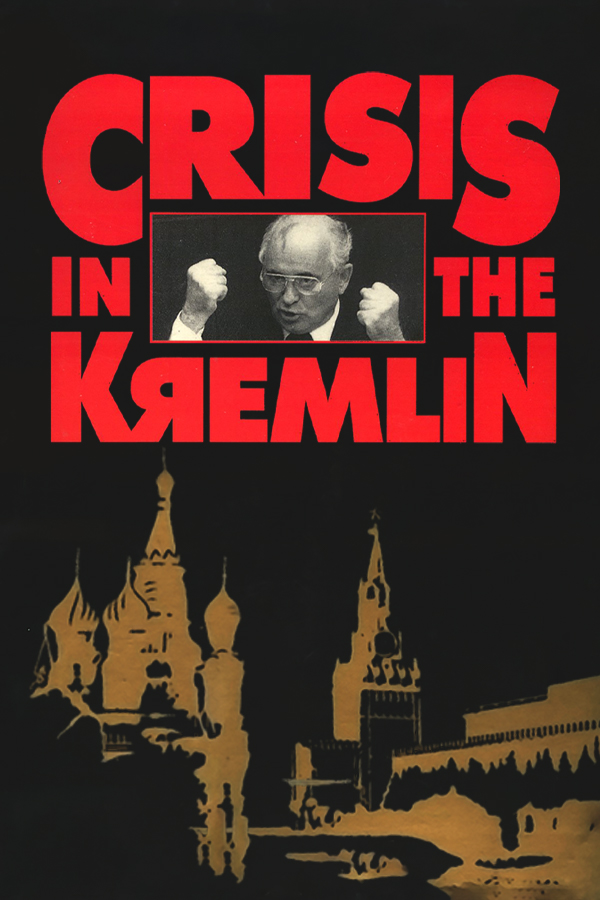
At the time of this writing, more than thirty years have passed since the collapse of the Soviet Union, creating the geopolitical conditions of post-Soviet Russia. For Western and non-Western observers alike, the Soviet Union’s dissolution has been a subject of debate going back decades. Usually, the causes are split into an economic one or a political one. Even more important is whether the Jeffersonians of the Democratic-Republican Party and their Empire of Liberty would have had something to gain from a pro-Neoliberal Soviet Union. Was a “Liberal Capitalist Soviet Union” more conducive to Jeffersonian hegemony over much the Eurasian landmass than the fragmentation of over a dozen independent nations?
That was the question posed in an original 1992 review of the 1991 geopolitical simulation strategy game, Crisis in the Kremlin, by Michigan attorney and one-time Republican State Representative Chuck Moss. Moss wrote his review of Crisis in the Kremlin as a freelance writer for Computer Gaming World, a US gaming magazine in those years. He lauded the fact that the player could liberalize the Soviet Union politically, economically and socially whilst recognizing the other fact that such liberalizations do not need to occur. The game encourages the player to do what they think is necessary to save the Soviet Union from collapse, experimenting with any combination of policy and budgeting proposals. But for the purposes of this review’s take on the 1991 title, how well does it hold up in comparison to the 2017 remake?
Released sometime during the final months of the Soviet Union, Crisis in the Kremlin was meant to be played on old IBM computers and sold for $69.95 (roughly about $148 USD in 2023). The user-interface and graphics, though dated by today’s standards, are definitely ahead of the curve for 1991. Even so, they convey the necessary information to play. Unlike the 2017 remake, there is no Soviet-era Russian music, so one’s playthroughs will mostly be conducted without any sound.
The game has the player assuming leadership of the Soviet Union in 1985. As a member of either the Conservative-Moderate, Reformist, or Liberal factions in the CPSU, the player is tasked with running the policymaking and budgetary affairs of the Soviet Union. The goal of the game, unlike its 2017 remake, is to simply survive the collapse of the Eastern Bloc and to preserve as much of the Soviet Union as possible whilst dealing with various domestic and foreign crises. This is not about building a Soviet Union that could plausibly win the Cold War, what I have been referring to as the second half of World War II (which in Russia is known as the “Great Patriotic War”). Rather, it is more akin to a survival game where the player’s endurance is tested against endless hordes of enemies.
In short, the 1991 version is essentially an endurance test. Every year is an unpredictable round of events that could lengthen one’s playthrough or bring about its untimely demise. How the player goes about ensuring the Soviet Union’s survival past 1991 is left to their discretion. They could try to implement aspects of Perestroika and Glasnost, hoping that everything will work somehow. They could resist them and try to maintain the Brezhnevian political economy by trying to overcome the shortcomings of Soviet-Type Economic Planning (STEP).
Every action the player makes is met with support or opposition from the factions, the central government, the KGB and Soviet armed forces, and the Soviet people. The game tracks the player’s performance based on how quickly they are reforming the Soviet Union or not, including how their actions impact the country’s overall quality of life. The player loses by being ousted from power by any one of the aforementioned groups. Survival is not guaranteed.
From the outset, it is very clear that when Kremlingames designed the economic mechanics of its remake, a lot of inspiration was taken from the original 1991 title. The player begins each playthrough with a budget that can be allocated to various areas of Soviet life. How much is allocated to a particular area will impact the country’s socioeconomic indicators, like the availability of food and everyday goods, healthcare and education, and so forth. What Kremlingames did differently is this: how does the player grow the Soviet Command Economy?
In the 2017 remake, the player must allocate state funds toward various sectors of the Soviet Command Economy, which have to be in lockstep with the level of funding allocated to the Central Planners. Misallocating funds in the former creates corruption and fraud, whereas misallocating funds in the latter prevents the Command Economy from operating at its peak performance. Wealth is created from the Productive Forces of the Command Economy, the official taxation rates, petroleum exports, and trade with pro-Soviet or Socialist countries. But because petroleum exports, taxation rates and economic activities in the Soviet Union are only good for early-to-mid game, the player is expected to expand the CMEA/Warsaw Pact to the rest of the world and either adopt a Mixed Economy or pursue Automated-Type Economic Planning (ATEP) vis-à-vis OGAS.
Unfortunately, the original 1991 version lacks the level of depth in this area. Here, the only two ways to survive is to dump as much funding into harvesting natural resources and cultivating agriculture. Begin each year reallocating a large portion of the Soviet budget to harvesting natural resources, reap in the revenues, then proceed to reallocate funding again to agriculture towards the end of the year. I can imagine how somebody like Moss was astounded by such a mechanic in 1992, but thirty years later it feels really repetitive, discouraging the player from actually developing the Command Economy. If anything, it reflects the problem of an economy like Venezuela, where even the slightest downturn in petroleum prices could cause it to tumble (a problem accurately illustrated in the 2017 remake).
Also similar to the economy mechanics, the policymaking mechanics also inspired the ones found in 2017 version, except not only did Kremlingames take inspiration, they also gave depth to the player’s choices and provided a list of known Soviet-era policies for the sake of historical realism. In the 1991 version, the player spends each year deciding to what extent the Soviet Union liberalizes or resists Economic, Political and Social Liberalization. Meanwhile, in the 2017 version, the policymaking choices are more detailed and can be implemented in any number of configurations.
For instance, a single playthrough of the 2017 version could have the player abandon Scientific Atheism with State-sponsored Eastern Orthodoxy or Shia Islam, the latter of which occurs after receiving a mysterious letter from the late Ayatollah Khomeini to convert to Shia Islam. They could strengthen the existing institutions that govern Council Democracy or declare martial law and establish a military dictatorship in the name of preserving the Soviet Union. They might be tempted to continue the space race while diplomatically condemning the SDI program at the United Nations or challenge US Dollar hegemony by supporting economic development of Socialist countries in Latin America, Africa, the Middle East, and Asia. Different endings can be attained for those who either chose the historical route without dissolving the country, survived a nuclear exchange, or laid the groundwork of establishing actual Communism. Replayability is one of the things that make the 2017 remake better than the 1991 original.
Another feature absent in the 1991 version for the 2017 remake is the corruption mechanic. Remember how Moss praised the 1991 version for allowing the player to liberalize the Soviet Union until it becomes a Liberal Capitalist Parliamentary Democracy? The player could also do that in the 2017 version, albeit at the cost of causing excessive corruption, inefficiency, crime, and socioeconomic instability within the Soviet Union than. The remake’s tagline says it all:
“Before you decide something, think – will it cause more harm than good?”
If there was one thing that I did not like the most about the 1991 original, it was that my actions did not carry enough significance to make me consider whether my actions made a difference. More importantly, my actions were also limited, preventing me from reforming the Soviet Union in any direction as I see fit within the expectations of the CPSU and the Soviet people. So many of my in-game decisions felt like empty rhetorical promises rather than the sort of action that should have been expected from the basic premise.
Overall, I do not recommend playing the 1991 original except for those who are curious about how much it differs from the 2017 remake. The 2017 remake on its own is a vast improvement on so many levels that there is now a possibility that Kremlingames might someday develop a definitive sequel to Crisis in the Kremlin. And while the remake alone has its own flaws, at least it respected the player’s choices and gave ample weight to their actions.
Categories: Blog Post
 The Fourth Estate
Sounds like a fun game.
LikeLiked by 1 person